What AA, AB and PB mean on Kenyan coffee
Kenyan coffee grades such as AA, AB and PB describe the physical size and shape of green beans after milling, not flavour, roast or farm. AA is the larger screen-size band, AB sits just below it, and PB, or peaberry, is a single rounded bean. One lot can produce all three, so a grade is a sorting label, not a measure of cup quality.
What do the letters AA and AB describe?
AA and AB describe bean size. After the dried coffee is milled, the green beans are shaken over metal screens with round holes. The screen number is the hole diameter in sixty-fourths of an inch, so screen 18 is 18/64 inch.
- AA covers the larger beans, roughly screen 17 and 18.
- AB covers medium to large beans, roughly screen 15 and 16.
The letters say nothing about taste, and AA is not "double A quality" in any sensory sense. They name a size band, and a bigger band is not automatically a better cup.
What do Kenyan coffee grades mean across the full range?
Size is only part of the picture. Kenyan sorting also separates beans by density and shape, so the full list has more codes than most gift labels show.
| Grade | What it physically describes |
|---|---|
| E | Very large "elephant" beans, above the AA band |
| AA | Large beans, roughly screen 17 and 18 |
| AB | Medium to large beans, roughly screen 15 and 16 |
| PB | Peaberry: one rounded bean instead of two flat-faced ones |
| C | Smaller beans, below the AB band |
| TT | Lighter-density beans separated out by air from the larger sizes |
| T | The lightest, smallest beans and fragments |
Treat the screen sizes as approximate. The categories are physical, and none of them is a flavour descriptor.
How does a peaberry differ from a typical coffee bean?
A peaberry is a single, rounded bean, while a typical coffee cherry holds two beans with a flat face each. In a peaberry cherry, only one seed develops, so it forms an oval or pea-like shape instead of a flattened half-sphere.
Peaberries are separated because their shape and density differ from the flat beans. Because they are round, they roll differently over the screens and are often picked out using a different sorting method. They make up only a small share of any crop.
PB means "peaberry" and nothing else. It does not mean a stronger, sweeter or rarer coffee, though sellers sometimes imply that. If a bag claims a particular taste for its peaberry, that claim comes from the roaster or cupper, not from the letters.
Can beans from the same lot end up in different grades?
Yes. A single lot from one washing station or estate is usually split into several grades during milling. The same harvest, picked and processed together, can yield AA, AB, PB, C and lighter fractions, because cherries naturally produce beans of different sizes.
That is why grade is not a farm label. Two bags from the same lot can carry different letters, and two bags with the same letter can come from different lots entirely. The stage before milling matters too, and what a washing station does for Kenyan coffee explains how cherries are processed before they reach the grading screens.
What can a grade code not tell you about flavour, roast or farm origin?
A grade code tells you about size, shape and density. It cannot tell you any of the following:
- Flavour. Taste depends on variety, altitude, soil, picking, processing and roasting. Professionals judge it by tasting, as described in how Kenyan coffee is assessed at a cupping table.
- Roast level. AA beans can be roasted light or dark. The letters describe green coffee, before any roasting.
- Farm or region. The code does not name a farm, cooperative, county or estate. Origin needs separate information, and how to trace the origin of a Kenyan coffee gift covers what to look for.
- Processing method. Washed, natural and honey coffees all get graded by size. See what natural and honey processing mean for Kenyan coffee for that separate question.
- Freshness. A grade does not date the roast or show how long the coffee has been stored.
A fair summary: grade is a useful sorting fact and a poor shortcut for taste.
How should you use grades when choosing a coffee gift?
Use the grade as one line of information, then look for the details that actually describe the cup. This short checklist works for a gift in Nairobi:
- Check whether the bag names a grade, and treat it as size information only.
- Look for a named origin, such as a cooperative, estate or county, instead of just "Kenya".
- Look for the roast description and, if available, the roast date.
- Decide on whole beans or ground based on whether the recipient owns a grinder, and see whole beans or ground coffee for a Kenyan coffee gift if you are unsure.
- Ask the seller to explain any quality claim that goes beyond size.
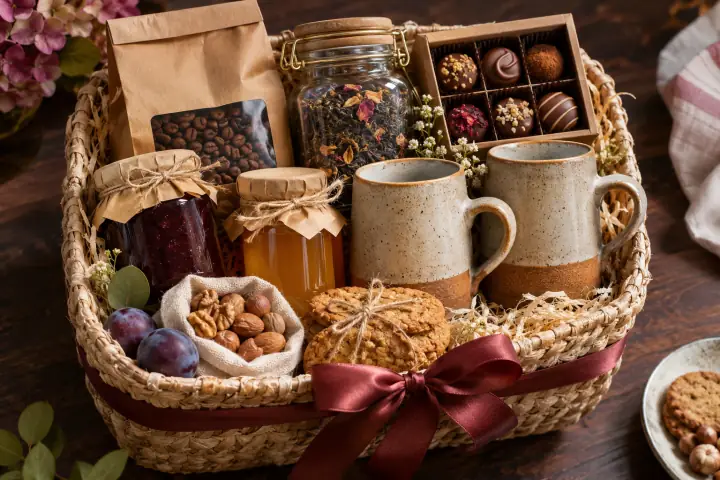
If you want a ready-made gift, WarmBow's hampers are a premium option, starting at KES 15,000, and cheaper coffee gifts in Nairobi will suit some budgets. The Little Joy (KES 15,000) includes Java House East Africa Blend ground coffee (375 g). The Slow Morning (KES 25,000) includes Spring Valley Coffee organic Kikaboni (250 g). This article makes no claim about the bean grade of those coffees, so if grade matters to you, ask the roaster before you choose.
Frequently asked questions
What does AA mean in Kenyan coffee?
AA is a size grade for larger green coffee beans, roughly screen 17 and 18, sorted on metal screens after milling. It describes bean size only and does not say anything about flavour, roast or origin.
Is Kenyan AA better than AB?
Not necessarily. AA beans are larger, but size does not determine taste. An AB lot can taste better than an AA lot, because flavour depends on variety, processing and roasting, which are judged by cupping, not by screen size.
What does PB mean in Kenyan coffee?
PB stands for peaberry, a single rounded bean that develops alone in a cherry instead of the usual pair of flat-faced beans. It is a shape grade, and it does not tell you the cup will be sweeter or stronger.
Do the letters on a coffee bag tell me where the coffee was grown?
No. Grade letters describe beans after milling and do not name a farm, cooperative or region. Look for a named origin on the bag, or ask the seller for the lot or source details.