How to evaluate corporate gift samples in Nigeria
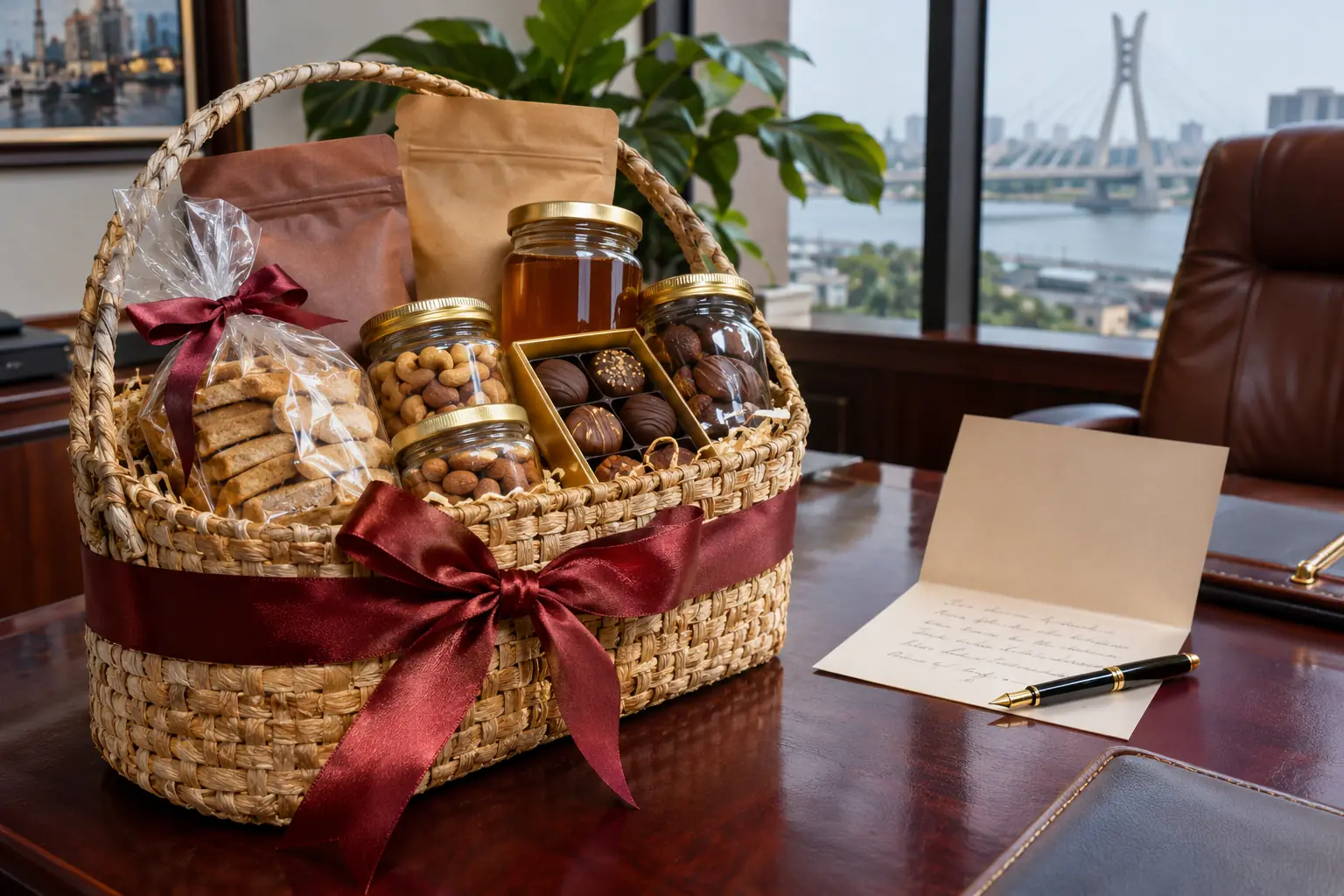
To evaluate corporate gift samples in Nigeria, test every item against your brief for size, finish and function, then judge the assembled gift as one unboxing. Record the result on a sign-off sheet, define what counts as an acceptable deviation, and keep the approved sample sealed as the production reference.
Why does a sample need written acceptance criteria?
A sample you approve by eye and a nod is not a standard. Once production starts, nobody can say what "the same as the sample" means. A pre-production corporate gift sample becomes useful only when you translate what you liked into things that can be measured, photographed and checked.
Do this before the sample arrives. Write down your brief: budget per gift, recipient type, branding position, and any items you refuse (alcohol, pork, strongly scented products). Then judge the sample against that brief rather than against how pleasant it feels to open.
What should you test on corporate gift samples in Nigeria?
Break the inspection into three groups: dimensions, finishes and function.
Dimensions
- Measure the outer container (width, depth, height, handle drop) and record it in millimetres.
- Weigh the full gift and, where possible, each main item. Weight is the quickest way to spot a quietly substituted item.
- Check pack sizes printed on labels against the quote.
- Read best-before dates. Packaged food and drink should show a NAFDAC registration number.
Finishes
- Inspect print, embossing or engraving for position, sharpness and colour. Compare logo colours against a reference code, not memory.
- Look for chips, scratches or uneven glaze on ceramics, and rough edges or stray fibres on woven baskets.
- Check ribbon colour and tying, and whether labels sit straight.
- Lagos heat and humidity are real tests. Leave chocolate and paper items in a warm room for a few hours and look for melting, bloom or curling.
Functional features
- Fill a flask with hot water, close it, tip it and check for leaks and heat retention.
- Lift the gift by its handle and carry it across the room. Does the weight sit safely?
- Open and close any lid several times.
- Check candles for a centred wick and a flat surface, and check that tins and jars seal properly.
What does a sample inspection sheet look like?
Print one sheet per sample and complete it with a second person. Photograph each row.
| Check | How to test | Pass standard to write down |
|---|---|---|
| Outer size | Ruler or tape, three sides plus handle | Stated size with a tolerance, for example ±10 mm |
| Total weight | Kitchen scale | Weight range agreed with the supplier |
| Item list | Tick against the quote | Every brand, size and quantity matches |
| Dates and registration | Read each pack | Minimum remaining shelf life agreed in writing |
| Branding | Compare against artwork file | Position, size and colour code match |
| Surface finish | Daylight and indoor light | No chips, scuffs, stains or loose threads |
| Function | Leak, lid, handle and carry tests | All pass |
| Heat tolerance | A few hours in a warm room | No melting, warping or colour run |
| Assembled look | Unboxing review (below) | Matches the approved photo set |
How do you check the assembled gift, not just the items?
Good items can still make a poor gift if they are packed badly. Review the finished gift as the recipient will meet it.
- Front view. Place it on a table and photograph it from the front, the top and one side. Does the tallest item hide the rest? Is the card visible?
- Unboxing sequence. Open it slowly and note what appears first, what is buried and whether anything needs untangling.
- Movement test. Pick it up, tilt it gently and carry it. Items should not slide, rattle or crush each other.
- Fill and balance. Look for gaps, flattened filler and a heavy side that makes the basket lean.
- Message check. Read the card as the recipient would. Confirm the name, company and note are spelled correctly and the card sits where it will be seen first.
- Reseal. Repack it. If your team cannot put it back together the way it arrived, a courier will struggle to as well.
Photograph the finished sample from the same angles you will use later for production checks.
Which deviations should trigger a revised sample?
Decide this in advance, in writing, so there is no argument later. As a starting rule, ask for a revised sample when:
- any item is replaced by a different brand, type, flavour or pack size
- the container material, size or construction changes
- a branded element changes position, colour or print method
- a new supplier is used for any component
- shelf life falls below the minimum you set
- a new item appears that was not on the approved list
- the assembled look changes noticeably, such as a different filler, ribbon or card position
Handmade variation is different. Woven baskets will never be identical, so set a tolerance rather than demanding exact copies. Slight differences in weave pattern or ribbon bow are normally acceptable, while a visible change in basket size or colour is not.
How should procurement communicate the approved sample as the reference?
Treat the approved sample like a signed contract schedule.
- Label and seal one reference sample. Write the date, order number and approver's name on it and keep it, unopened after photographing, in your office.
- Send the supplier a sign-off pack. Include the completed inspection sheet, the photo set, the item list with sizes, and the artwork file.
- State tolerances and substitution rules. Say plainly that no substitution is allowed without a revised sample and written approval.
- Get written confirmation. Ask the supplier to reply that production will match the reference. Email is enough.
- Request first-unit photos. Before the full batch ships, ask for photographs of the first assembled units and compare them to the reference.
- Check on receipt. Open several boxes from each delivery and run the same sheet.
If your needs shift after approval, follow the process in how to change a corporate gift order in Nigeria. For gifts you will buy again, the same reference carries forward, as covered in how to set up repeat corporate gift orders in Nigeria. If you are still choosing a supplier, how to vet corporate gifting companies in Nigeria covers questions to ask before any sample is made.
When is a ready-made hamper simpler than a custom build?
Custom builds need the full sample process. A ready-made hamper with fixed contents shortens it, because your job becomes checking that the contents and presentation fit your brief. Ask any supplier whether a sample or a photo of the exact hamper is available before you commit.
For co-branded work, such as a partner gift with both logos, the sample step matters more. See how to plan co-branded partner gifts in Nigeria.
WarmBow is a premium option. Its four Nigerian hampers have fixed prices from ₦155,756 (The Little Joy) to ₦778,779 (The Grand Gesture), and each comes in a woven artisan basket with a satin ribbon, swing tag and printed greeting card. Lagos listings for corporate hampers run from roughly ₦19,000 to ₦135,000 at the entry and mid range, so cheaper choices exist and suit tighter budgets. If your budget supports the premium band, you can see the hampers and match one to the brief on your sheet.
Frequently asked questions
How many corporate gift samples should I request?
Request one sample of the full gift for each design you are considering. If you are comparing two suppliers or two designs, request one of each so you can judge them side by side on the same sheet.
Who should sign off a corporate gift sample?
The person who owns the brief should sign, ideally with a second reviewer such as procurement or finance. Record both names and the date on the inspection sheet so the approval is traceable.
Can I approve a sample from photos alone?
Photos help you shortlist, but they cannot show weight, finish, smell, leaks or how the gift feels when carried. Where possible, approve a physical sample, and use photos for first-unit checks during production.
What if production units differ slightly from the sample?
Compare the difference to your written tolerances. Small handmade variation within tolerance is acceptable. Anything outside tolerance, or any substituted item, should go back to the supplier for a revised sample before the batch ships.
Should I keep the sample after approval?
Yes. Keep it sealed and labelled as your production reference until the order is accepted, and longer if you plan repeat orders.