Gift etiquette for visiting in-laws in Nigeria

Gift etiquette for visiting in-laws in Nigeria begins with your partner, who knows what the family expects. On a first social visit, bring one modest, shareable gift from you both, hand it to the senior host soon after greeting, and keep it separate from any formal introduction or marriage rite, which follow their own customs.
What is the gift etiquette for visiting in-laws in Nigeria?
There is no single national rulebook. Nigerian families differ by region, religion, generation and household, so the safest guide is the person who grew up in that home. Your partner can tell you what is normal, what would feel excessive and what would be missed.
For a first social visit, three principles hold in most homes:
- Bring something, and keep it modest. The gesture matters more than the price.
- Choose something the whole household can share, such as tea, coffee, chocolate or honey.
- Do not copy a ceremony. A first visit is a visit, not an introduction or a marriage rite.
For wider context on how gifting works across the country, see our overview of gift etiquette in Nigeria.
Do I take a gift to my partner's parents on a first visit?
Yes, in most cases. No rule requires it, but arriving empty-handed at a family home for the first time can look unprepared, even if nobody says so. A small, thoughtful gift tells the parents you respect their home and have made an effort.
The exception is when the family has told you not to bring anything. Take that at face value, but still ask your partner whether a small token would be welcome anyway. Some hosts say "don't bring anything" out of politeness.
What should you ask your partner before the visit?
Ask your partner these questions at least a few days before, so you have time to shop:
- Is this a casual visit or something the family sees as significant? The answer shapes everything else.
- Who will be at home? Parents only, siblings, grandparents or extended relatives.
- Who is the senior host? This is the person you should greet first and hand the gift to.
- What do they enjoy, and what should I avoid? Ask about allergies, diabetes, religious practice and whether alcohol is welcome. If in doubt, leave it out.
- Has anyone mentioned expectations or a list? If so, treat the visit differently (see below).
- Will we eat together, and should I bring part of the meal? If the host has asked, our guide on when a Nigerian host asks you to bring part of the meal covers it.
- What should I wear?
Your partner may not have thought about some of these. Asking shows you want to get it right, which is itself a good first impression.
How do you check whether the family sees the visit as informal or ceremonial?
Ask your partner directly: "Is this a visit, or does your family see it as an introduction?" Then look for signals. If the answers point to ceremony, do not improvise. Let your partner and the family guide you.
| Signal | Likely informal visit | Likely ceremonial visit |
|---|---|---|
| Wording of the invitation | "Come for lunch" or "come and say hello" | A set date, with elders or family representatives mentioned |
| Who is expected | Parents and perhaps siblings | Extended family, relatives who speak for the family |
| Requirements | None mentioned | A list, specific items or a stated process |
| Dress | Smart everyday clothes | Traditional attire requested |
| Your partner's tone | Relaxed, "just meet them" | Careful, "let me check what they expect" |
If you spot two or more signals in the right-hand column, ask your partner to check with the family before you buy anything. Our guide to what guests can bring to a Nigerian wedding introduction explains how that occasion differs from an ordinary visit.
Why keep the two apart?
A gift that resembles an item from a marriage rite can send an unintended signal. The family may read a first social visit as a formal step, or feel that the proper process is being skipped. A plain, friendly gift avoids the confusion. If the family later wants a formal introduction, that is a separate occasion with its own guidance.
Should you and your partner bring one gift?
Yes. For a first social visit, one gift from both of you is usually the best choice. It reads as a couple arriving together, it avoids a pile of separate presents and it spares anyone from comparing.
Three practical points:
- Put both names on the card. Your partner's name sits beside yours, which signals that you come as a pair.
- Let your partner help choose. They know the household's tastes better than you do.
- Agree who pays before you shop, so it does not become awkward at the door.
If your partner would like to bring something separate, such as a favourite snack for a sibling, that is their choice. Your joint gift is the one you present. For the question of host versus household, read should a gift be for the host or the whole household. A shareable gift sidesteps most of the problem.
Whom do you hand the gift to, and when?
Hand the gift to the senior host, usually the parent who welcomes you or the eldest present, shortly after the greetings. Do this before you sit down to eat, so the gift is received as a welcome, not an afterthought. Your partner can introduce you and prompt the moment.
A simple sequence works well:
- Greet the elders first, in the way your partner suggests.
- Wait for introductions to finish.
- Offer the gift with both hands, say a short line such as "This is from us both, with thanks for having us", and let your partner add a word.
- Accept whatever the host does with it. They may set it aside to open later, and that is normal.
If both parents are present, address the gift to the household and hand it to whoever greeted you first. If you want ideas aimed at one parent, see first-visit gifts for a Nigerian father-in-law.
What should a first-visit gift look like in Lagos?
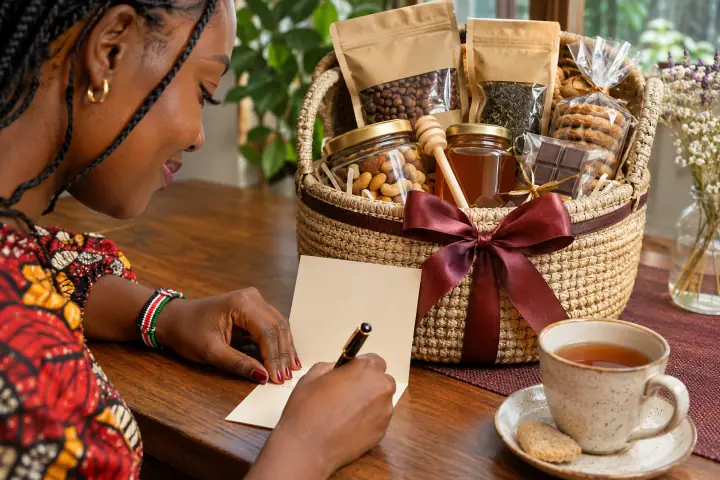
Aim for something shareable, easy to store and not obviously expensive. A tea, coffee and chocolate selection suits most homes. Lagos gift shops list entry and mid-range corporate hampers from roughly ₦19,000 to ₦135,000, so a considered gift does not need a large budget.
WarmBow is a premium option, and cheaper choices exist. If you want a ready-wrapped gift, the hampers start with The Little Joy at ₦155,756. It includes Twinings English Breakfast tea, Happy Coffee Nigerian roasted coffee, Ferrero Rocher, Loom Craft Nigerian bean-to-bar chocolate, McVitie's shortbread, ReelFruit dried mango and toasted coconut chips and Nigerian raw blossom honey, in an artisan basket with a ribbon and a card.
The card carries your personal note, so you and your partner can write it together. Check allergies first, and note the hamper contains honey, chocolate and coconut.
WarmBow covers Lagos in Nigeria, not other cities yet, and delivery dates and any charges are confirmed before payment. Handing over a gift in person usually feels warmer on a first visit, so only send it ahead if your partner thinks that suits the family.
Frequently asked questions
Do I have to bring a gift on a first visit to my partner's parents in Nigeria?
No rule requires it, but it is the courteous thing to do. A modest, shareable gift from you both shows respect for the home. If the family says not to bring anything, ask your partner whether a small token would still be welcome.
Should my partner and I bring one gift?
Yes, one joint gift is usually best on a first social visit. Put both names on the card and agree who pays beforehand. Your partner can still bring a small separate item for a sibling if they wish.
What if the family mentions a list or specific items?
Treat the visit as ceremonial, not casual. Ask your partner to confirm with the family what is expected and who will guide you. Do not guess, and do not mix those items with an ordinary first-visit gift.
Who should receive the gift?
The senior host, usually the parent or elder who greets you. Offer it soon after the greet