How to Present a Gift to an Elder in Nigeria
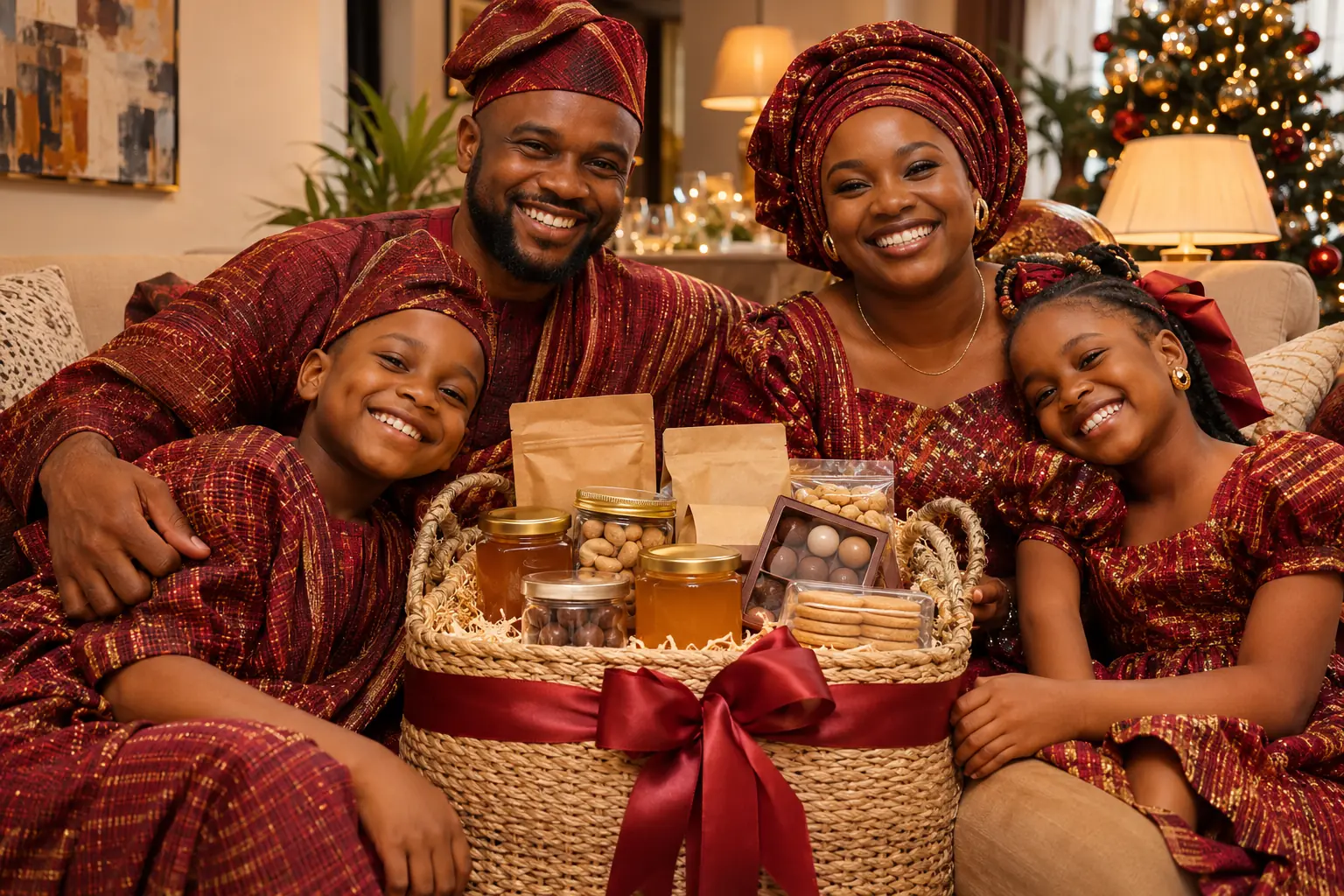
To give a gift to an elder in Nigeria, finish your greeting first, address them the way their family does, and offer the gift with your right hand or both hands before following their lead. Customs differ by family, community and faith, so treat these as sensible defaults and adjust to the cues you see in the room.
How do you give a gift to an elder in Nigeria, step by step?
A calm, unhurried handover matters more than any single gesture. Here is a sequence that works in most homes in Lagos and beyond.
- Ask beforehand. A relative or host can tell you what the elder likes to be called, who else will be present and whether the visit is formal.
- Arrive with the gift ready but out of the way. Keep it close, or let a companion hold it, so your hands are free for greeting. A large basket can sit on the floor until the greetings are done.
- Greet fully. Ask after the elder's health and household, and wait for their reply.
- Say a short line. Something like "This is a small thing for you, Sir" or "Ma" is enough. Skip any long speech.
- Offer the gift with your right hand or both hands. Hold a basket from underneath so it feels steady.
- Follow their lead. Accept their thanks or prayers graciously and don't ask them to open it in front of everyone.
Should you finish greeting the elder before offering the gift?
Yes. Finish greeting the elder first, then offer the gift. In many Nigerian homes the greeting is the main show of respect, and a gift offered mid-greeting can look like you are rushing past it or buying favour.
Take your cue from the elder. If they are still asking about your journey, your parents or your work, the greeting is not finished. When the conversation settles and they turn their attention to you, that is your opening.
Greeting styles vary. In many Yoruba families, younger men may prostrate and younger women kneel. In other families a slight bow, a handshake or a lowered gaze is the norm. If you are unsure, watch what the younger relatives do when they enter, and do the same. Nobody expects a visitor to know every custom, and a sincere, polite greeting is rarely held against you.
How can you choose a respectful form of address?
Use the title the family uses, and when unsure, use a respectful general term followed by the elder's name. Listening in the first minute is the most reliable method.
Try these in order:
- Listen to others. If cousins say "Daddy" or "Mama", or call someone "Chief" or "Alhaji", follow that.
- Ask a relative quietly. "What should I call him?" is a normal question.
- Use a safe fallback. "Sir" or "Ma" works in many settings. "Uncle" or "Aunty" followed by a first name is common for older family friends.
- Use earned titles. Chief, Pastor, Dr, Alhaji, Hajia or Elder are often cherished. Skip one only if the elder tells you to.
- Avoid first names alone. Calling an elder by first name without a title is the usual way to come across as casual.
If you cannot speak the elder's language, a warm greeting in English plus a relative's help still works. The guide to giving a gift in Nigeria when you don't share a language covers what to say and how to ask for help.
When is using the right hand or both hands a useful default?
Use the right hand or both hands whenever you hand something to an elder and you are unsure of the family's preference. In many Nigerian communities the left hand is seen as less respectful for giving and receiving, so the right hand is the safer choice. Both hands show care and effort.
Both hands are especially useful when:
- the gift is heavy or awkward, such as a basket or a boxed hamper
- the elder is much older than you or holds a formal title
- you are handing over something that holds food or drink, so it does not tilt
A simple way to do it is to hold the gift at waist or chest height, step forward slightly, and offer it with a small nod. Do not extend it at arm's length or from a distance.
This is a default, not a rule. Some people are left-handed, some families are relaxed, and some physical conditions make the right hand impractical. If that applies to you, read how to present a gift in Nigeria if you can't use your right hand, and say a quiet word so the gesture is understood.
What if the elder gestures for you to set the gift down instead?
Set the gift down where they indicate, with a thank-you, and do not insist on handing it over. A gesture toward a table, a chair or a relative is a clear instruction, and following it is the respectful move.
Elders may do this for several reasons: their hands are full, they cannot hold something heavy, they prefer a younger relative to receive gifts, or they would rather not make a show of it. None of these means the gift is unwelcome.
- Place the gift gently, using both hands if it is large.
- Say a short line such as "Thank you, Ma, this is for you."
- Step back slightly and return to the conversation.
If others are present and you are unsure whether to mention the gift aloud, see should you announce a gift at a Nigerian family gathering. For broader guidance, the guide to gift etiquette in Nigeria is a good companion.
Which hamper suits an elder?
Choose by the occasion and the size of the household, and remember that the handover matters more than the price. WarmBow's hampers arrive in a handwoven basket with a satin ribbon and a printed card carrying your personal note, so the message is already written when you hand it over. WarmBow is a premium option. Lagos gift shops list entry and mid-range hampers from roughly ₦19,000 to ₦135,000, and a modest gift offered well is always welcome.
| Hamper | Indicative price | Suits |
|---|---|---|
| The Little Joy | ₦155,756 | A short visit or a thank-you, with tea, coffee, chocolate, honey and dried fruit |
| The Slow Morning | ₦259,593 | An elder who enjoys tea and coffee, with jam, honey, shortbread and two stoneware mugs |
| The Golden Hour | ₦519,186 | A milestone birthday or a full household, with a scented candle, insulated flask and two mugs |
| The Grand Gesture | ₦778,779 | A major occasion, in a grand lidded heirloom basket |
Bigger baskets are heavier, so plan to carry them with both hands. If you cannot visit in person, you can type the delivery address yourself or let the recipient confirm it, though each recipient needs an email address and an international WhatsApp number. Delivery is in Lagos only for now, and the delivery date and any delivery charge are confirmed before you pay. The elder never sees the price.
Frequently asked questions
Is it rude to give an elder a gift with the left hand?
In many Nigerian communities it can seem less respectful, so the right hand or both hands is the safer default. If you cannot use your right hand, a brief explanation and a warm manner usually settle it.
Do I have to kneel or prostrate before handing over a gift?
Not necessarily. Practice varies by family and ethnic group, and a sincere greeting with a slight bow is widely accepted. Watch what younger relatives do on arrival and follow their example.
What should I say when I hand over the gift to an elder?
Keep it short and warm, for example "This is a small thing for you, Sir" or "Ma". A long speech can embarrass an elder, and a simple line leaves room for their thanks or prayers.
What if I don't know what to call the elder?
Ask a relative quietly before you go in, or listen to how others address them. If you still cannot tell, "Sir" or "Ma" is a respectful fallback in many settings.