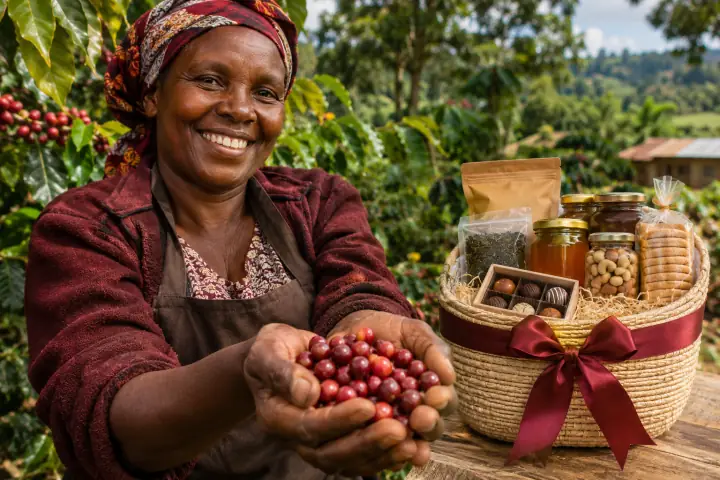
What is in a Christmas hamper and why are tins common?
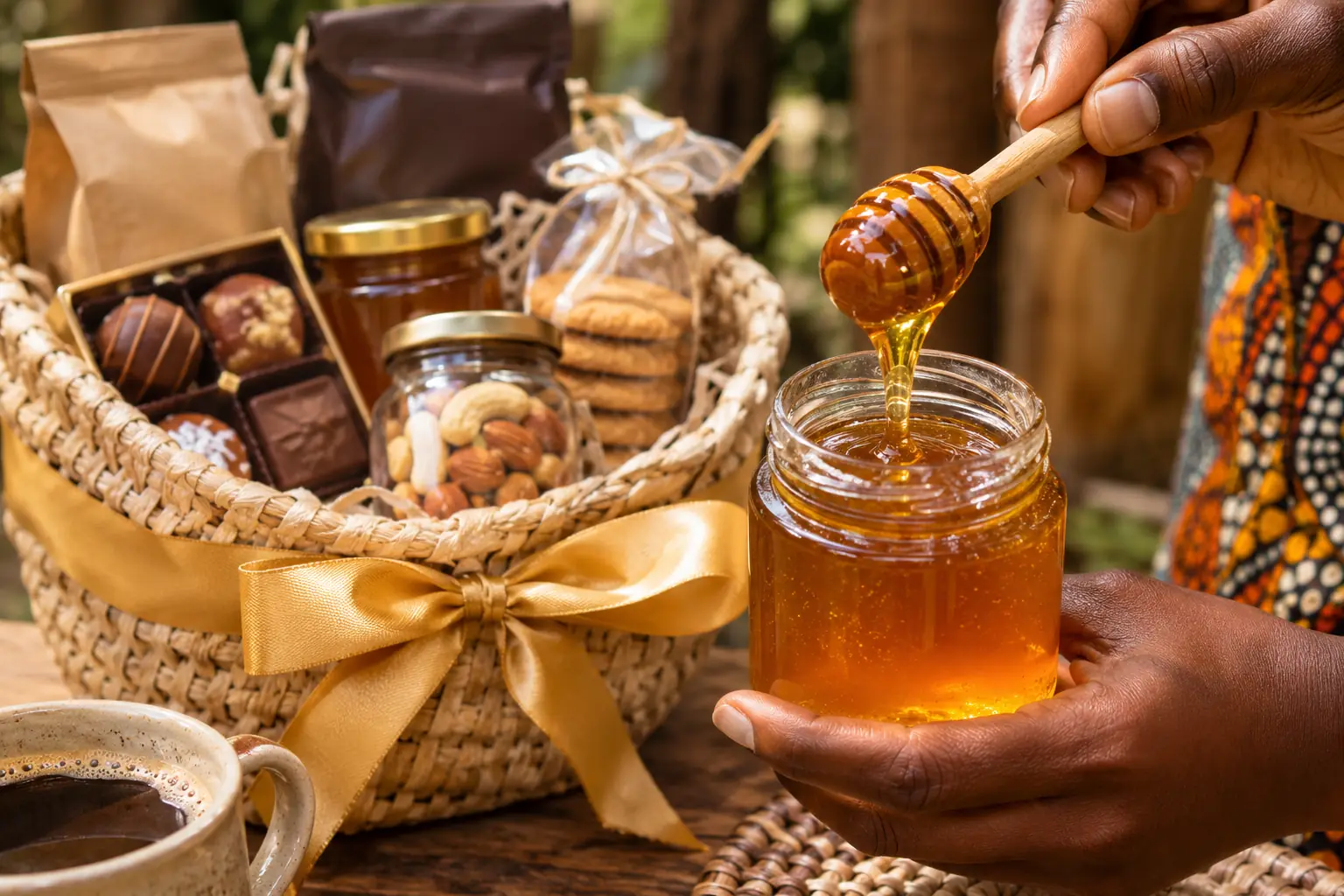
What is in a Christmas hamper? Traditionally, a basket of shelf-stable festive foods: a biscuit or shortbread tin, jars of jam or chutney, chocolates, tea or coffee, nuts, and often a Christmas pudding or a bottle of wine. Tins and jars dominate because they travel well, keep without refrigeration and look like a gift the moment they are lifted out.
What is in a Christmas hamper, and which foods appear most often?
A traditional hamper is built from a handful of familiar categories, and each one has a job to do. The table shows what usually appears and why.
| Item | Role in the hamper | Why it suits a hamper |
|---|---|---|
| Biscuit or shortbread tin | The sharing item | Airtight, sturdy, and the tin is reusable |
| Jam, honey or chutney | The spread for toast, cheese or crackers | Sealed jars; sugar or acid keeps them stable |
| Chocolate | The small luxury | Compact, widely liked, easy to portion |
| Tea and coffee | The hot-drink pairing | Dry goods that last, and they match biscuits |
| Nuts and dried fruit | The snack and the festive flavour | Dense, dry and long-lasting |
| Crackers | The savoury balance | Offsets the sweetness of everything else |
| Christmas pudding or fruit cake | The traditional centrepiece | Rich and dense, made to be kept |
| Wine or another drink | The celebratory extra | Bottled and sealed, but optional |
Most hampers carry five or six of these categories rather than all eight. The mix matters more than any single product: something sweet, something savoury, something to drink and something to spread.
Why are biscuit tins, preserves and chocolate so popular?
Biscuit tins
A tin protects fragile biscuits from knocks in transit and keeps them crisp once opened. It stacks neatly in a basket and gives the hamper some height. Afterwards the tin becomes a container for sewing supplies, spices or more biscuits, so the gift outlasts its contents. With Christmas biscuit tins and preserves alike, the packaging is part of the appeal.
Preserves
Jam, honey and chutney are pantry foods meant to be eaten over weeks, not at one sitting. Sealed jars cope with a bumpy ride, and a small-batch jar feels more special than its everyday cousin. A broken seal or a dented tin deserves a check before you eat; our guide to what damaged seals and dented tins mean for hamper food explains what to look for.
Chocolate
Chocolate is familiar, small and easy to share, which makes it the most dependable treat in the basket. In warm Nairobi and Lagos weather it softens quickly, so it is best kept somewhere cool soon after it arrives.
Why do Christmas hampers include shelf-stable food?
Hampers are packed ahead, travel by road, and may sit in an office, a car boot or a hallway before anyone opens them. Shelf-stable food copes with all of that. There are four practical reasons:
- No refrigeration needed. Nobody has to find fridge space on arrival.
- Tolerance for delay. A recipient can open the hamper days after it arrives and still enjoy it.
- Easy mixing of makers. Dry and jarred goods from different producers can share one basket safely.
- Portioning over time. A hamper becomes weeks of small pleasures rather than one rushed meal.
That is the real reason Christmas hampers include shelf-stable food: the gift has to survive the journey and the wait. Each product still carries its own date, so reading the pack matters. Our guide on how to read a hamper items list before choosing one shows what a list does and does not tell you.
Are wine and Christmas pudding essential or optional?
Both are optional. They belong to the classic British hamper, but what makes a hamper traditional is the basket of shareable, long-lasting foods, not any single item.
Christmas pudding is a dense, spiced, fruit-heavy pudding that is made well ahead and reheated, which is why it suits a hamper. It is also a heavy, specific flavour that not everyone wants. A fruit cake, shortbread or a jar of preserves can play the same "festive centrepiece" role. If you wonder why dried fruit appears so often in festive sweets, why Christmas hamper sweets often contain dried fruit covers it.
Wine is a celebratory extra, and many recipients do not drink alcohol for religious, health or personal reasons. Tea, coffee and good chocolate fill the same "something special to share" space. Drinks that can replace wine in an alcohol-free hamper lists the usual stand-ins.
How does a festive hamper in Kenya or Nigeria differ from a British one?
The structure stays the same: a sweet item, a savoury item, a hot drink and a spread. The ingredients shift towards what is grown and made locally, and the heavier British staples often drop away.
| Element | Traditional British hamper | Kenya and Nigeria versions |
|---|---|---|
| Hot drinks | Black tea, instant or ground coffee | Kenyan tea and coffee in Kenya; Nigerian roasted coffee alongside imported tea in Nigeria |
| Spreads | Marmalade, chutney, fruit jam | Jam and raw honey, including comb honey in Kenya and raw blossom honey in Nigeria |
| Nuts and fruit | Mixed nuts, glacé or dried fruit | Macadamias in Kenya; dried mango, coconut chips and cashews in Nigeria |
| Chocolate | Boxed chocolates | Imported boxed chocolates plus local bars, including Nigerian bean-to-bar chocolate |
| Centrepiece | Christmas pudding, wine | Often a tin of biscuits or shortbread; pudding and wine are less fixed |
| Basket | Wicker hamper | Handwoven sisal and seagrass in Kenya; cane or raffia in Nigeria |
Warm weather also changes what works. Chocolate and some preserves cope better when stored away from heat, a point covered in what to unpack first when a hamper arrives on a hot day. WarmBow's Kenyan and Nigerian hampers follow this local pattern, with tea, coffee, honey, nuts, chocolate and biscuit tins in each.
How much does a hamper cost in Kenya and Nigeria?
Prices vary widely. In Kenya, online gift shops list corporate hampers from roughly KES 2,000 to just over KES 50,000, and many entry hampers sit around KES 4,000 to KES 5,000. In Lagos, corporate Christmas hampers are listed from roughly ₦19,000 to ₦135,000 at the entry and mid range, with luxury ones up to about ₦600,000.
WarmBow hampers sit in the premium band, and cheaper hampers exist that suit smaller budgets. All four ship in a handwoven basket with a satin ribbon and a printed card carrying the sender's note. Nigerian prices are indicative naira equivalents.
| Hamper | Kenya | Nigeria |
|---|---|---|
| The Little Joy | KES 15,000 | ₦155,756 |
| The Slow Morning | KES 25,000 | ₦259,593 |
| The Golden Hour | KES 50,000 | ₦519,186 |
| The Grand Gesture | KES 75,000 | ₦778,779 |
Whichever hamper you look at, the contents list tells you more than the price. Check the categories against the table above and see which of the basket's jobs each item fills.
Frequently asked questions
Which foods commonly appear in a traditional Christmas hamper?
A biscuit or shortbread tin, jam or chutney, chocolate, tea or coffee, nuts and dried fruit, and crackers. Many also include a Christmas pudding or fruit cake and a bottle of wine, but those two are optional.
Why are biscuit tins, preserves and chocolate popular inclusions?
They keep well without refrigeration, survive transport, and are easy to share. The tin can be reused, jars last for weeks, and chocolate is a familiar treat that most recipients enjoy.
Are wine and Christmas pudding defining ingredients of a hamper?
No. They are associated with the classic British hamper but are optional extras. Many hampers leave out alcohol and use tea, coffee or chocolate instead, and a fruit cake or shortbread can replace the pudding.
How might a festive hamper in Kenya or Nigeria differ from a British one?
It tends to feature local tea, coffee, honey, nuts and chocolate in place of heavier British staples. Kenyan hampers often include macadamias and comb honey, while