One shared Christmas gift for a Kenyan family reunion
A shared Christmas gift for a family reunion in Kenya works best when it is chosen for the table rather than for one person, can be opened together, and has a plan attached: what gets eaten on the day, what goes home with the host, and what becomes a keepsake. Agree those three things before you buy.
When should we choose a gift for the whole gathering rather than for the host?
Choose a gift for the gathering when the whole family is meant to use it together, and a host gift when one person carried the cost or the work. A gathering gift suits a reunion where many households contribute and the day revolves around one long meal or tea.
Signs that a gathering gift is the better choice:
- Several households are chipping in, and nobody wants their share to buy something for one person.
- The host is the same relative every year and already receives thank-you gestures.
- The family spans generations, so one person's taste would not suit everyone.
If you are travelling to a rural home, our guide to Christmas host gifts to take upcountry from Nairobi covers the host separately. The two sit well side by side: a small personal gift for the host and one larger gift for everyone.
A shared Christmas gift for a family reunion in Kenya: what should it include?
A good shared gift is mostly food and drink people can enjoy together, in sizes that stretch across many hands, plus one or two items that outlast the weekend.
- Shareable food with a long shelf life: tea, coffee, honey, jam, biscuits, chocolate and nuts keep well if the reunion runs over several days.
- Variety, not volume: ten different small items give every age something to reach for.
- Nothing that needs setting up: no batteries, assembly or cooking.
- Something durable: a basket, serving board or teapot that stays in the family home afterwards.
Check allergies before buying. Macadamias and other nuts are common in Kenyan hampers, so read labels and warn the family in advance. If you are still working out how much to spend, read how to set a Christmas gift budget in Kenya first.
What can adults and children enjoy together without anyone being left out?
Tea, chocolate, biscuits, honey and granola let adults and children share the same gift, because each person takes what suits them from the same basket. Think of the day in three moments.
| Moment | What works for everyone | Watch out for |
|---|---|---|
| Morning | Granola, honey on bread, tea, coffee | Children may skip coffee, so keep tea and honey in reach |
| Afternoon tea | Shortbread, butter cookies, crackers, chocolate | Nut allergies; open nut-free items first |
| Evening | Chocolate truffles, a candle on the table | Keep candles out of children's reach |
Give children a job rather than a separate gift. Let them hand around the biscuits or lay out the chocolate, so they stay part of the shared moment. For ideas aimed at younger relatives, see Christmas gifts children can share at a family gathering.
Who should open the shared gift and when?
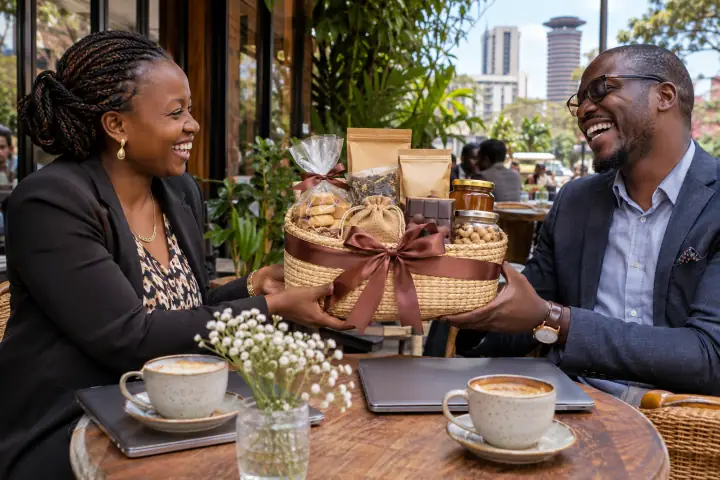
Let the eldest relative, or the person who travelled furthest, open it at the shared meal or afternoon tea with everyone gathered. Do not open it on arrival, when people are still unpacking and half the family is missing.
- Gather everyone at the table, including the children.
- Read the card aloud, naming every contributing household in the note.
- The eldest lifts the lid or unties the ribbon.
- Children lay the items on the table and an adult reads out what each one is.
- Share the first items there and then, such as the chocolate or the tea.
If your family also does a name-draw, keep it separate so nobody mistakes the shared gift for one person's present. Our piece on Kenyan Christmas gifts for a family gift exchange helps with that side of the day.
How should we decide what happens to keepsakes or unopened items afterwards?
Decide before you buy, not on the last evening, by sorting the contents into three groups: use on the day, take home, and keep as a family keepsake. Written in the family WhatsApp group, this stops two aunties reaching for the same jar.
- Agree the rules early. Post a short message such as "Food is shared on the day; the basket stays with the family home."
- Name a keeper. One person looks after the keepsake, such as a basket, serving board or teapot, and brings it back next year.
- Split unopened food fairly. Divide sealed jars and packets by household, one of each item where possible, rather than by who asks first.
- Rotate. If the keepsake moves to a different household each year, note it in the group chat so the tradition holds.
How much does it cost per household, and is The Grand Gesture the right choice?
The Grand Gesture is priced at KES 75,000 in total, and splitting it across households makes it manageable. The shares below are before any delivery charge:
| Households contributing | Share per household |
|---|---|
| 5 | KES 15,000 |
| 10 | KES 7,500 |
| 15 | KES 5,000 |
| 25 | KES 3,000 |
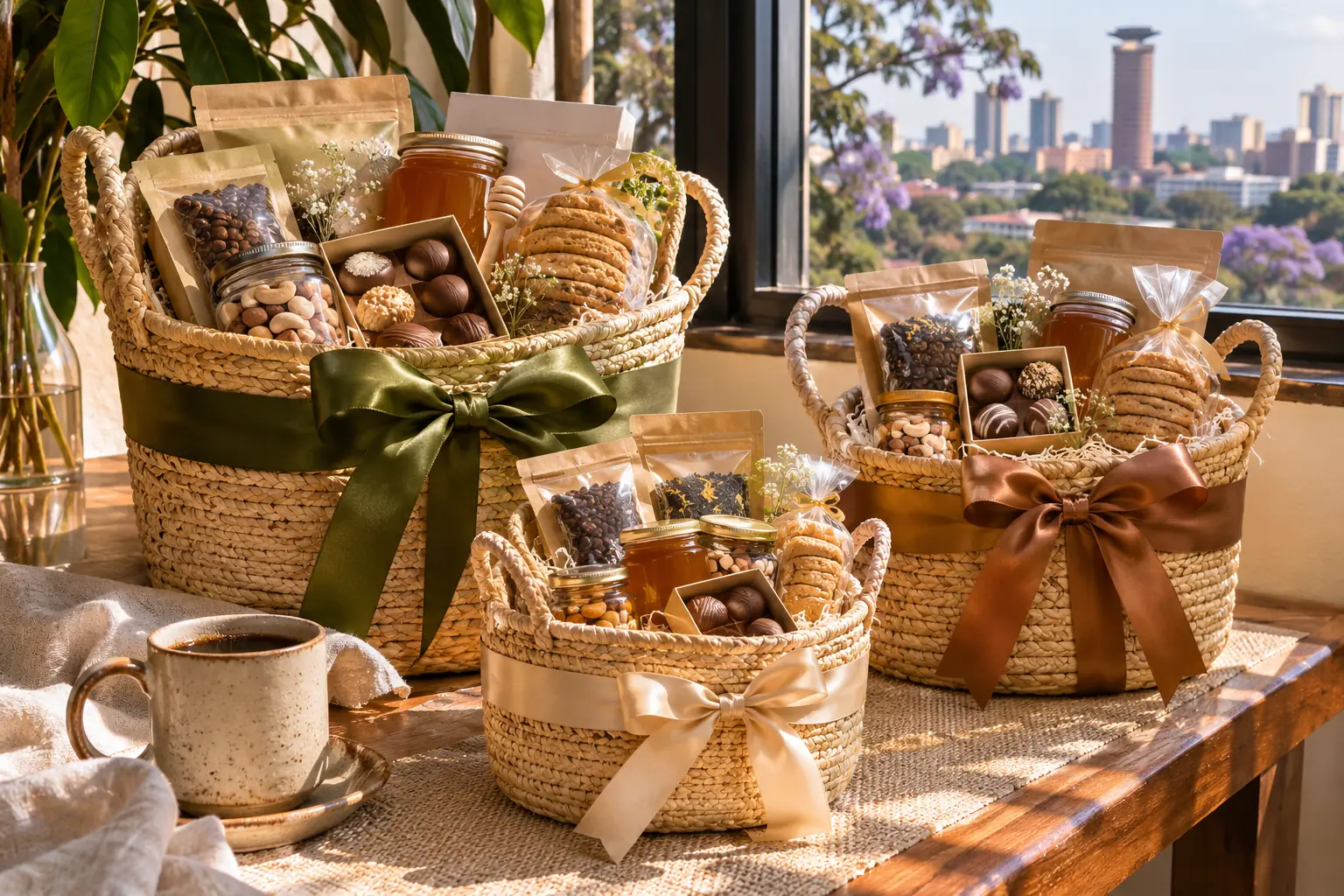
WarmBow is a premium option, and cheaper hampers exist. Online gift shops in Nairobi list corporate hampers from roughly KES 2,000, and many entry hampers sit around KES 4,000 to KES 5,000. For a smaller family, The Slow Morning at KES 25,000 or The Golden Hour at KES 50,000 follows the same idea on a smaller scale.
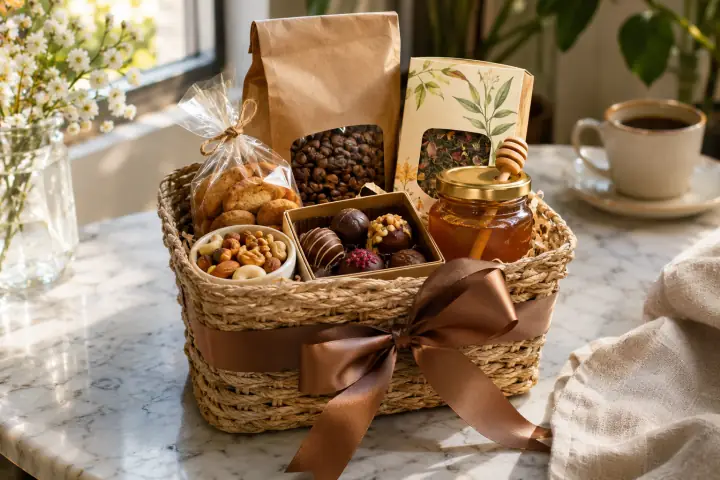
The Grand Gesture suits a big reunion because it holds variety for every age: Kenyan coffee and Kericho Gold tea, Ferrero Rocher and Lindt Lindor truffles, shortbread and butter cookies, granola, macadamias, honey and plum jam. It also includes a hand-carved olive wood serving board, a stoneware teapot with two teacups, a vacuum flask and a soy candle, all in a lidded woven basket that makes a natural keepsake. With only two teacups, treat the teapot as a table centrepiece. You can see all four on the WarmBow hampers page.
Delivery is currently Nairobi only, and upcountry areas are not yet covered, so have the hamper sent to a Nairobi address and carry it with you. Delivery dates and any charges are confirmed before payment. With Christmas Day on 25 December, settle the contribution split now.
Frequently asked questions
Should a family reunion gift go to the host or to the whole family?
Give it to the whole family when it is meant to be shared at the table and many households are contributing. Give it to the host when one person carried the cost or work of the day. You can do both with a small personal gift for the host.
How do we split the cost of one gift between relatives?
Divide the total by the number of contributing households and agree the amount in the family group chat before ordering. For a KES 75,000 hamper, 10 households pay KES 7,500 each. Let anyone give more or less quietly.
What if a relative has a nut allergy?
Tell contributors before you order and read the ingredient labels on every item. Many Kenyan hampers include macadamias, granola or pesto. Set nut-free items aside for that relative and keep nut products on a separate plate.
Who keeps the basket or serving board after Christmas?
Pick one keeper before the reunion and write it in the family group chat. Many families rotate the keepsake each year, so the basket or board travels to a different household and returns at the next gathering.