Kenyan honey and the craft of coating macadamias
Kenyan honey changes from jar to jar because bees collect nectar from whatever is flowering near the hive, and the season, region and processing shape what you taste. Comb honey is sold in its wax; extracted honey is spun out and jarred. Macadamias, grown in the central highlands, are shelled, roasted and glazed with honey for a sweet, crisp finish.
Why does Kenyan honey vary from jar to jar?
Honey is a record of what was in flower. A hive near acacia scrub, a hive in a eucalyptus stand and a hive beside flowering crops will each produce honey with a different colour and flavour. Drier counties such as Baringo and Kitui are well known for beekeeping, and honey from the highlands tastes different again.
Three things drive the variation:
- Forage: Lighter honeys tend to taste milder and more floral. Darker honeys tend to taste stronger, sometimes slightly woody or malty.
- Season: The same hive gives a different harvest after the long rains than in a dry spell, because different plants are flowering.
- Handling: Heating and heavy filtering can lighten colour and soften flavour. Gentle straining keeps more of the original character.
A colour difference between two jars is therefore normal, and it is part of the appeal of a natural product. Be careful with the word "raw": it is not a fixed legal grade on most labels. When it appears on Kenyan honey, it generally means honey that has not been heated high or filtered heavily, so ask the producer how theirs is handled.
What is the difference between comb honey and extracted honey?
Comb honey is honey still sealed in the beeswax cells where the bees stored it, cut from the frame and sold as it came. Extracted honey is the same honey spun or drained out of the comb, strained and put into a jar. Both are real honey; they differ in texture, handling and how you eat them.
| Comb honey | Extracted (jarred) honey | |
|---|---|---|
| What you get | Honey inside edible wax cells | Liquid or set honey only |
| Processing | Cut from the frame, minimal handling | Uncapped, spun, strained, jarred |
| Texture | Wax is soft and chewy, honey bursts from the cell | Smooth pour or spreadable set |
| Best used | On warm toast, with cheese, on a board | Tea, baking, porridge, dressings |
| Practical note | Messier to serve, an "occasion" food | Easy to portion and keep |
When choosing between Kenyan comb honey and jarred honey, comb is the better gift for presentation, while jarred is the better everyday pantry item. You can eat the wax; many people chew it and discard what is left.
Does crystallisation mean honey has spoiled?
No. Crystallisation is a natural change, not spoilage. Honey is a concentrated sugar solution, mostly glucose and fructose. Glucose dissolves less readily, so over time it forms fine crystals and the honey turns cloudy, thick or grainy.
That is why raw honey crystallises more visibly than heavily processed honey: tiny particles of pollen and wax in it give crystals something to form around. Honey with more glucose, and honey kept somewhere cool, sets faster.
To make it runny again:
- Stand the closed jar in a bowl of warm water, not boiling water.
- Leave it for 15 to 30 minutes, stirring once or twice.
- Let it cool and keep it at room temperature.
Overheating damages delicate flavour. Real spoilage looks different: a sour, fermented smell or fizzing suggests the honey has taken on too much water. Crystals inside comb are also harmless.
Where are macadamias grown in Kenya, and why are they usually sold shelled?
Macadamias grow mainly in the central highlands and the slopes around Mount Kenya, in counties such as Kiambu, Murang'a, Embu and Meru. The trees like warm, well-watered, frost-free land at mid altitudes, and they are grown by both smallholders and larger estates.
They are usually sold shelled because the shell is extremely hard and needs industrial cracking. The kernels must also be dried properly before they can be stored. By the time a ready-to-eat product reaches a shop shelf, the nut has been cracked, sorted and dried, which makes it practical to roast, coat and pack.
How does a honey coating change roasted macadamias?
A plain roasted macadamia is buttery, rich and soft-crunchy. Honey adds floral sweetness, a thin glossy shell and a faint caramel note where the sugars brown. The result is crisper on the surface and sweeter on the tongue, while the nut stays creamy inside.
Makers' methods vary, but the general sequence looks like this:
- Crack and dry: Kernels are removed from the shell and dried.
- Roast: Heat develops a toasty flavour and firms the texture.
- Coat: Honey, often with other ingredients, is tumbled over the nuts in a thin layer.
- Set: The coating dries so nuts do not clump, leaving a light glaze.
Each step changes something. Roasting builds flavour, the honey adds sweetness and gloss, and setting fixes the texture. Chocolate-coated macadamias work differently: the coating melts and softens the bite, while honey keeps it light and snappy.
What does a gift built around Kenyan honey and macadamias look like?
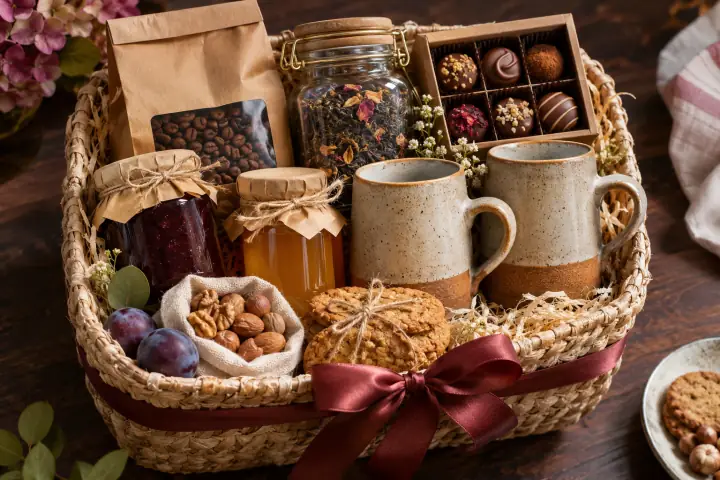
If you want to taste both traditions in one box, The Little Joy from WarmBow is built that way. At KES 15,000, it holds Eva raw Kenyan comb honey (250 g), Kakuzi honey-coated roasted macadamias (125 g) and Out of Africa chocolate-coated macadamias (80 g). It also holds Kericho Gold infusions, Java House ground coffee, Cracker Shack cheddar crackers, Ferrero Rocher and a 70% dark chocolate bar, packed in a natural sisal basket with your personal note printed on the card.
To be honest about price, WarmBow is a premium option. Nairobi online shops list corporate hampers from roughly KES 2,000, and many entry hampers sit around KES 4,000 to 5,000, so a cheaper route suits some budgets. If you want comb honey and nuts on a smaller budget, buying them separately is a sensible alternative.
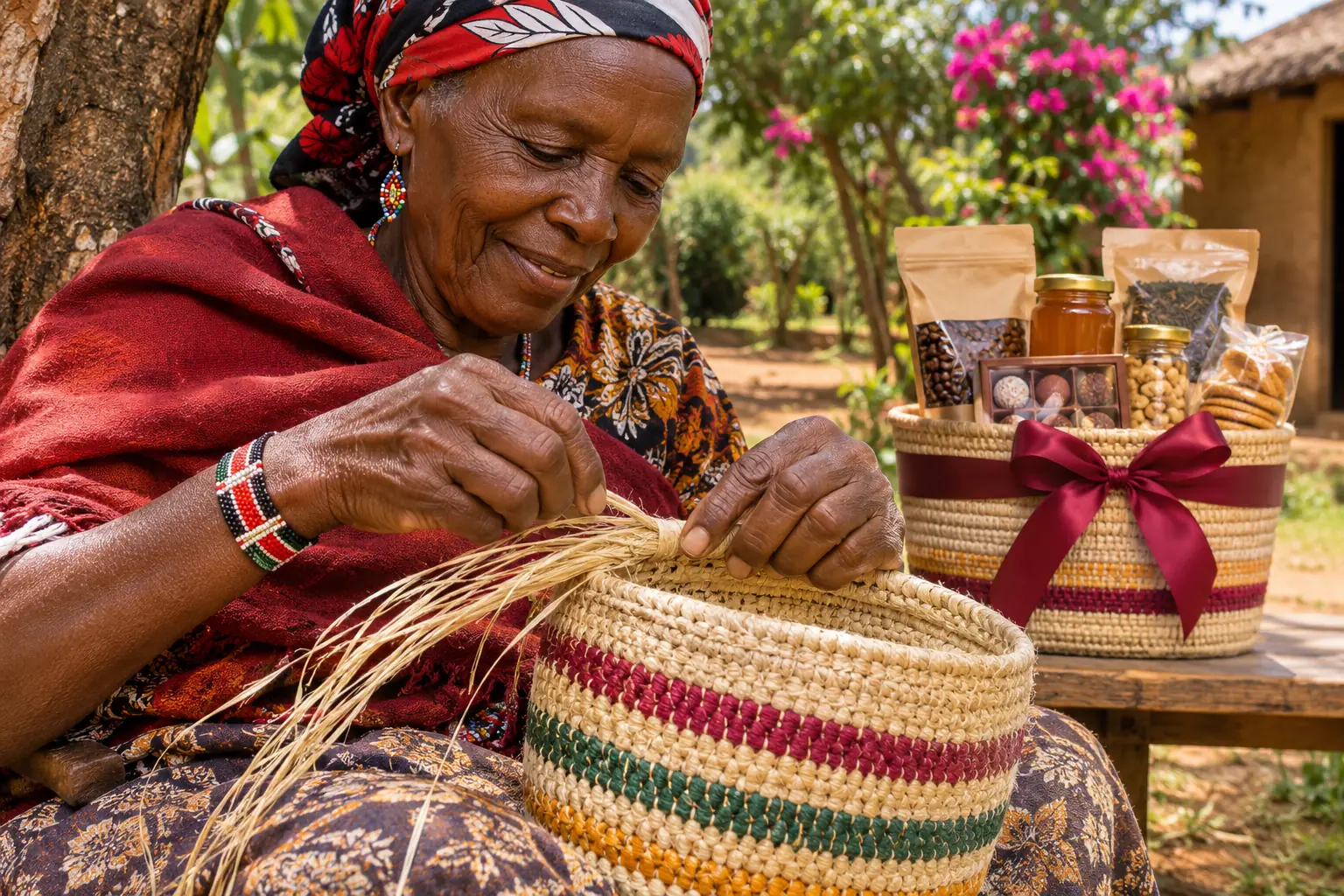
Serve the comb on warm toast or beside the crackers and cheese, and keep the nuts for the last bite of the evening. The basket itself is worth admiring too; how Kenya's sisal and seagrass baskets are woven explains the craft behind it. For more local pantry ideas, see local gifts in Kenya made for the everyday table, and for pairing options, read about what makes Kenyan coffee a distinctive gift and Kenyan tea gifts beyond the everyday cup.
Frequently asked questions
Can you eat the wax in comb honey?
Yes. Beeswax is edible, soft and chewy, and many people eat it with the honey. It does not dissolve, so you can also chew it for a moment and set it aside.
How should I store raw Kenyan honey?
Keep it in a tightly closed jar or container at room temperature, in a cool cupboard away from direct sun and damp. Avoid the fridge, because cold speeds up crystallisation. Honey that has set can be gently warmed in a bowl of warm water.
How do I keep honey-coated macadamias crisp?
Store them in an airtight container in a cool, dry place. Moisture in the air softens the glaze, so close the pack well after opening and keep it away from steam and sunlight.
Is honey safe for babies?
No. Honey, including raw and comb honey, should not be given to children under 12 months, because it can carry bacteria that a baby's gut cannot yet handle. For older children and adults it is generally fine.