How to choose a food hamper for sharing in Kenya
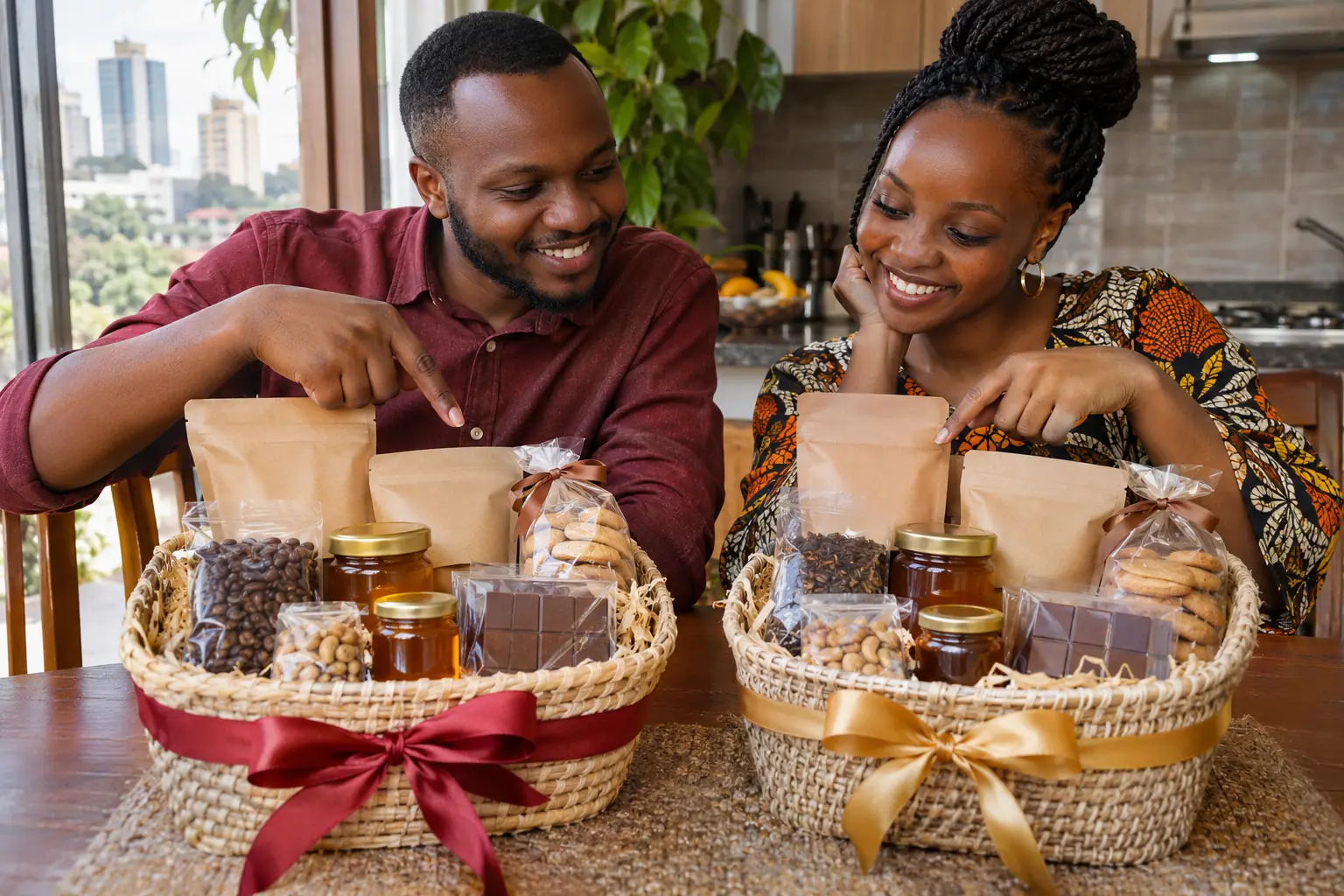
A food hamper for sharing in Kenya works when you count usable portions, not pack sizes. Sealed chocolates, tins of shortbread and nuts go straight onto a table, while jars, coffee and granola need a knife, kettle or bowl. Add up what opens together and you will know how many people one basket can serve.
How do you estimate portions from the listed packs?
Convert each pack's weight or piece count into servings using a planning portion, then count only the items people can eat without cooking. The portions below are planning assumptions for a snack-style gathering, not measured figures, so adjust them for your group. This is the core of working out serving sizes for a food hamper: a 250 g pack is only as useful as the number of hands it can reach.
| Pack type | Planning portion (assumption) | Example in The Golden Hour | Rough portions |
|---|---|---|---|
| Individually wrapped chocolates | 1 to 2 pieces per person | Ferrero Rocher T30 (30 pieces, 375 g) | 15 to 30 people |
| Coated nuts | About 25 g per person | Absolute Chocolate coated almonds (250 g) | About 10 people |
| Ground coffee | About 10 g per cup | Spring Valley Coffee Chungwa roast (250 g) | About 25 cups, but needs brewing |
| Tins of biscuits or crackers | Check the piece count on the pack | Walkers shortbread tin, Cracker Shack crackers | Varies by pack |
To turn a basket into a headcount:
- List every item and label it ready to eat, needs a simple tool, or needs preparation.
- Convert only the ready-to-eat items into portions using the table above.
- Add sweet and savoury portions separately, because a shared table needs both.
- Compare the lower of the two totals with your headcount and round down.
If the pack weight is not listed, do not guess. Ask the seller or leave that item out of your count.
When are multiple small packs more useful than one large pack?
Multiple small packs are more useful when people will graze at different times or from different tables, and one large pack is better when everyone gathers around a single table at once. A 30-piece box of individually wrapped chocolates counts as many small packs, because each piece can be handed round without a knife or bowl.
Small packs suit these situations:
- An office floor where the basket sits in a kitchen and people help themselves through the afternoon.
- A family lunch where children, grandparents and guests eat different things.
- A group with mixed dietary needs, where separate packs let people check their own labels.
A single large pack suits a tin of shortbread passed down a table or a jar of honey for one breakfast spread. The weakest design is a large jar with nothing to spread it on. If you are planning a team gift, our guide to setting up a shared Christmas hamper at work in Kenya covers how to organise the sharing itself.
Food hamper for sharing in Kenya: which items can go straight onto a shared table?
Items sealed in their own wrapper or tin and eaten by hand can go straight onto a shared table. Spreads and cereals need a small tool or bowl, and coffee and tea need hot water and cups. Sorting a basket into these three groups takes two minutes and shows what it can really serve. Here is that sort for The Golden Hour:
| Ready for the table | Needs a simple tool or pairing | Needs preparation or is not food |
|---|---|---|
| Ferrero Rocher T30 | Heavens honey (spoon or dipper) | Spring Valley and Java House coffee |
| Absolute Chocolate coated almonds | Kaputei plum jam (knife, crackers) | Kericho Gold tea jar and infusions |
| Absolute Chocolate 70% bar | Basil pesto (knife, crackers) | Wax & Scents vanilla soy candle |
| Walkers shortbread tin | Grove & Meadow granola (bowls, milk or yoghurt) | Insulated flask, two stoneware mugs, basket |
| Cracker Shack crackers | – | – |
| Kakuzi macadamias | – | – |
Savoury items are often the hardest to divide, so our guide to choosing a savoury gift hamper in Kenya is useful if your group leans away from sweets. For the sweet side, see how to choose a chocolate hamper in Kenya.
How can you avoid a basket where only one or two items are easy to divide?
Check the contents list for at least four items that are ready to eat, spread across sweet and savoury, before you buy. Baskets fail when most of the weight is in coffee, jars and a candle, leaving one chocolate box to feed the room. Use this checklist:
- At least four items that can be eaten straight from the pack.
- Both sweet and savoury items, so no guest is left with only chocolate.
- At least one box or tin of individually wrapped or easily snapped pieces.
- Spreads paired with something to spread them on, such as crackers or shortbread.
- Pack weights or piece counts listed for every food item.
- No more than a couple of items that need hot water, bowls or a kitchen.
- A plan for nut allergies, since macadamias, almonds and hazelnuts are common in sharing baskets. Ask recipients before ordering.
- Enough cups, plates and a knife for the group. Our guide to choosing a hamper with tableware in Kenya explains what stoneware and flasks add and what they do not.
What can The Golden Hour put on a shared table?
The Golden Hour is a large food basket for sharing, with six items that can be eaten straight from the pack, three spreads that pair with the crackers and shortbread, and a coffee and tea shelf for the hot-drink round. On the planning assumptions above, that suits a snack session for roughly 10 to 15 people, not a full meal.
Counted item by item:
- Sweet, ready to eat: Ferrero Rocher T30 (30 pieces), coated almonds (250 g) and a 70% dark bar.
- Savoury and neutral, ready to eat: Walkers shortbread tin, Cracker Shack crackers and Kakuzi macadamias. Weights for these are not listed here, so confirm them on the product page before you count portions.
- Spreads that make the crackers and shortbread work harder: Heavens honey, Kaputei plum jam and basil pesto.
- Hot drinks: two ground coffees (250 g and 375 g), Kericho Gold tea, an insulated flask (500 ml) and two stoneware mugs. Two mugs serve two people, so bring extra cups for a group.
This shareable snack hamper in Kenya sits in the premium band at KES 50,000. Nairobi online shops list corporate hampers from roughly KES 2,000, and many entry hampers sit around KES 4,000 to 5,000. If you only need a few packs to put out on a table, a cheaper basket may do the job. The Golden Hour and the other WarmBow hampers suit milestones where the basket itself is part of the gift, and delivery is currently limited to Nairobi. Delivery dates and any charges are confirmed before payment. For the basket itself, see how to choose a woven gift basket in Kenya.
Frequently asked questions
How many people can one food hamper for sharing feed?
It depends on the ready-to-eat items. As a planning assumption, count one to two chocolates and about 25 g of nuts per person, then add savoury portions separately. Use the lower of your sweet and savoury totals, and round down.
Is a hamper with many small packs better than one with a few large ones?
For grazing at different times, yes. Individually wrapped pieces can be handed round without tools. For a single table sitting together, a tin of shortbread or a jar of honey works well, provided something is there to eat it with.
Which hamper items usually need extra equipment?
Honey, jam and pesto need a spoon or knife, granola needs bowls and milk or yoghurt, and coffee and tea need hot water and cups. A candle and a basket are not food at all, so leave them out of your portion count.
How do I check a food hamper for nut allergies?
Read the full contents list for macadamias, almonds and hazelnuts, which are common in sharing baskets, and ask recipients before you order. Our guide on choosing a Christmas hamper when allergies matter goes through what to check.
Does a food hamper for sharing replace a meal?
No. Most hampers are built from snacks, spreads and drinks, so treat one as a shared table of treats. For a full meal, use it alongside catering rather than instead of it.