How do you check a food hamper for allergens?
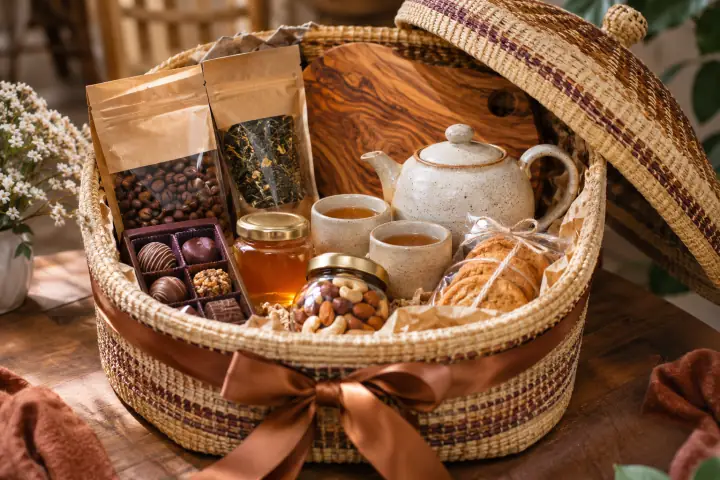
How to check a hamper for allergens comes down to one rule: read the ingredients list and allergen statement on every packet, not the product name or a photo. Look for "contains" and "may contain" lines, check each cracker, chocolate and coated snack separately, and set aside anything with a missing or unreadable label. The pack in your hand is the only reliable source.
How to check a hamper for allergens, packet by packet
Do this before you hand over the hamper, or before anyone with an allergy eats from it.
- Name the exact allergen first. Write down peanuts, a specific tree nut (almond, hazelnut, macadamia, cashew), milk, egg, wheat, soy or sesame. "Nuts" is too vague to check against.
- Empty the basket onto a clean table and lay out every food item, including small extras tucked under the shredding.
- Read the full ingredients list on each food packet in the hamper, including the small print.
- Find the allergen statement. It may be a "Contains" line, bold words inside the ingredients, or a separate box.
- Read any "may contain" line and decide whether that risk is acceptable for this person.
- Sort into three piles: clearly fine, clearly not fine, and unclear. Unclear items go with the not-fine pile.
- Check the best-before date while the pack is in your hand. Our guide on how long hamper foods last explains what to look for.
Where should you look for ingredients and allergen warnings on each packet?
Look at the back or side of the pack, usually near the barcode, nutrition panel or best-before date. The ingredients list is a block of text, and the allergen warning is either bolded inside it or printed directly underneath. On tins, check the base or the lid. On boxes, check the flap or the underside.
Allergen labels on hamper foods in Kenya vary in layout. Locally made products, imported biscuits and chocolates, and small-batch jars each follow their own style, and some imported packs carry several languages, so find the English line. Use this table as a guide:
| Item type | Where to look | Common allergens to check |
|---|---|---|
| Jars (honey, jam, pesto) | Side or back label, sometimes the lid | Pesto can contain nuts and milk; read the "may contain" line on every jar |
| Biscuit or shortbread tins | Underside of the tin, inner sleeve or box | Wheat, milk, egg, nuts |
| Crackers | Back of the pack | Wheat, milk (cheese flavours), sesame, soy |
| Chocolate bars and boxes | Back of the wrapper or box base | Milk, nuts, soy |
| Coated nuts and granola | Back of the pouch, near the seal | The specific nut, milk, oats, wheat, soy |
| Coffee and tea | Pouch, box or jar label | Usually few, but check flavoured blends |
Individual sweets inside a box often have no label of their own. Read the outer box and keep it with the sweets.
What is the difference between "contains nuts" and "may contain nuts"?
"Contains nuts" means nuts are an ingredient in the recipe. "May contain nuts" means nuts are not an ingredient, but the food was made or packed where nuts are handled, so traces could be present.
Here is how to treat each:
- Contains: the product is not safe for anyone allergic to that nut. Remove it.
- May contain: this is a precautionary statement about cross-contact. It is not a promise that the food is safe. Wording varies between brands ("may contain traces of", "made in a facility that handles"), and you cannot judge the real risk from the pack alone.
For a mild intolerance, a "may contain" line may be acceptable. For a serious allergy, treat it like "contains" unless the person's doctor has advised otherwise. If you are unsure, ask the person or their family. Do not decide for them.
Why should you check crackers, chocolates and coated snacks individually?
Because a product name tells you the flavour, not the full recipe, and each item has its own ingredients and its own factory conditions. A hamper photo cannot show any of this, and a name like "dark chocolate" says nothing about what sits in the small print.
- Crackers: cheddar crackers involve milk through the cheese. Many also contain wheat, and some carry a sesame or soy warning. A plain cracker from the same brand can have a different list.
- Chocolates: a dark bar can still list milk or milk traces, and many chocolates contain soy lecithin. Nut pieces, pastes and "may contain nuts" lines are common.
- Coated snacks: honey-coated or chocolate-coated nuts have two sets of ingredients, the nut and the coating. The coating can add milk, soy or wheat. Granola often combines oats, nuts and honey in one pack.
Also remember that curated describes how items were chosen, not that they were screened for a particular allergy.
What should you do if an item has no readable ingredients or allergen label?
Treat it as unsafe for the allergic person and do not guess. A missing, torn, smudged or foreign-language-only label gives you no way to confirm what is inside.
Do this instead:
- Set the item aside, away from the safe pile.
- Keep the outer packaging, which may carry the details even when the inner wrapper does not.
- Ask the shop or brand that supplied it for the full ingredients and allergen information in writing.
- If you cannot get an answer, leave the item out. A gap in the hamper is better than a risk.
Why is removing one product not enough to call the whole hamper allergen-free?
Taking out the obvious item, such as a nut-coated snack, only deals with that one product. It does not make the rest of the hamper safe, for three reasons:
- The other items are still unchecked. Chocolates, biscuits, granola and crackers can each carry the same allergen or a "may contain" warning.
- Cross-contact is possible inside the basket. Crumbs, residue or a split pack can end up on other packets and in the shredding or weave.
- Packaging can hide the answer. A tin or box may hold several products with different labels.
Only a packet-by-packet check, with every item cleared, lets you describe a hamper as suitable for someone with a specific allergy. If you are buying for a team, our guide to checking corporate gift hampers in Kenya for food fit covers handling several dietary needs at once.
How do you choose a hamper for someone with an allergy?
Ask the recipient or someone close to them before you order, and name the allergen. If the allergy is severe, a food hamper may not be the right gift at all, and a non-food present is the safer choice.
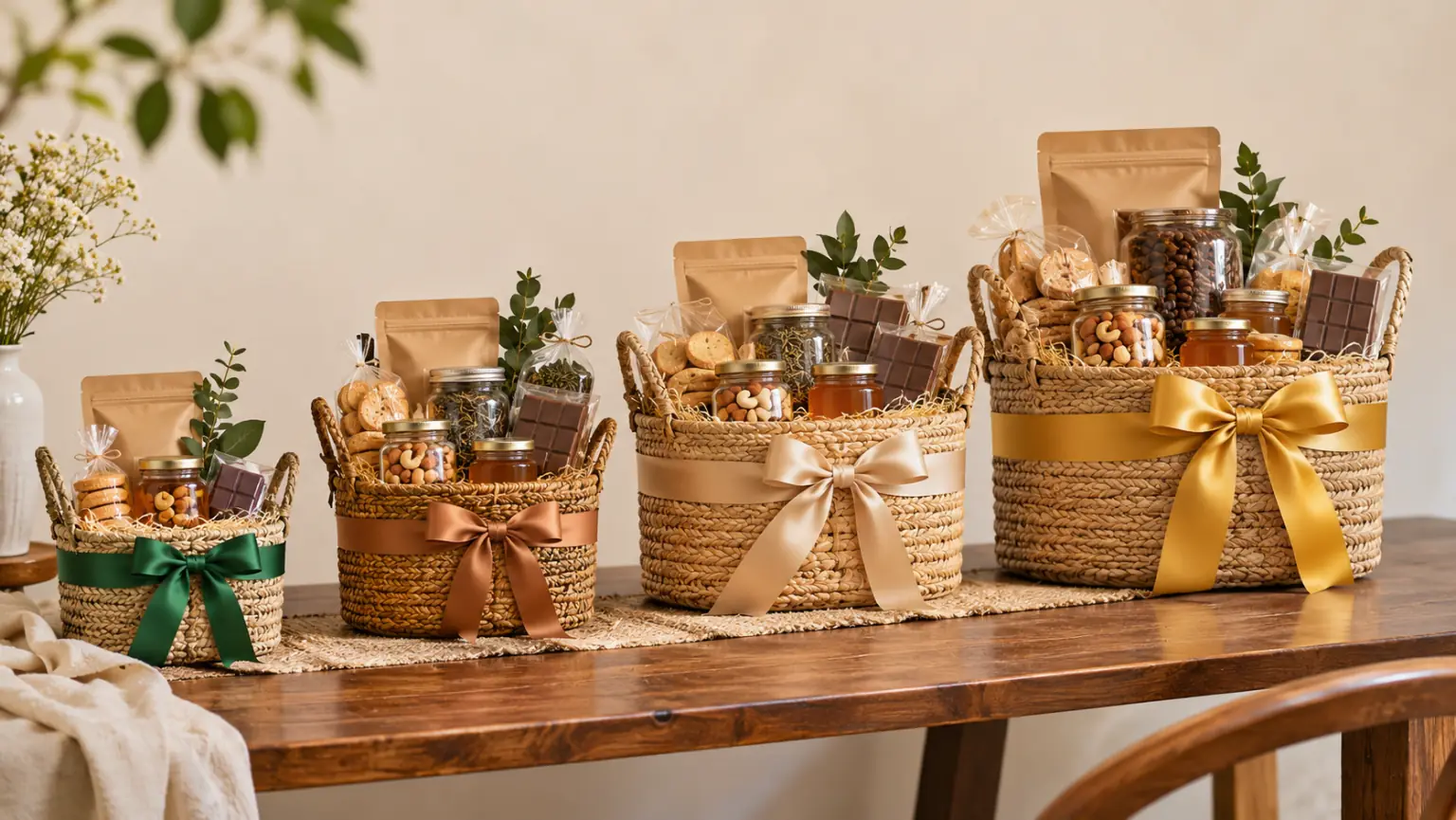
If food still suits, pick the simplest option and read every label yourself. WarmBow hampers are a premium choice. The Little Joy costs KES 15,000. The Slow Morning costs KES 25,000. The Golden Hour costs KES 50,000. The Grand Gesture costs KES 75,000. Several include nuts, chocolate and cheese crackers, so treat none of the four as allergen-free. Nairobi online gift shops list simpler hampers from roughly KES 2,000, with many entry corporate hampers around KES 4,000 to 5,000, and a smaller, plainer hamper can be easier to verify.
Frequently asked questions
How do you check a gift hamper for milk?
Read each ingredients list for "milk" and its hidden forms: butter, cream, cheese, whey, casein, lactose, milk powder and ghee. Then read the "contains" and "may contain" lines. Check chocolates (including dark ones), cheese crackers, shortbread, butter biscuits, granola and pesto first.
Can a hamper photo or product name tell you if a food is safe?
No. A photo shows packaging, not the recipe, and a name gives only the flavour. Allergens are listed in the ingredients and allergen statement on the pack, and recipes can change between batches, so read the label on the packet you are holding.
Is "may contain nuts" safe for a nut allergy?
Not automatically. It means traces could be present from shared equipment or premises, but nuts are not an ingredient. For a serious nut allergy, treat it like "contains nuts" unless the person's doctor has said otherwise.
Should you ask the recipient before sending a food hamper?
Yes, if you can. A quick message asking about allergies or foods they avoid prevents a wasted gift and a possible health risk. If it is a surprise, ask a family member or colleague instead.